


This is part one in a two-post series focused on how federal agencies can meet the high expectations – and aggressive timeline – of America by Design.
Under the new America by Design initiative, federal agencies face a fresh mandate to overhaul digital experiences. The expectation goes beyond a simple reskinning. Rather, agencies must reimagine how their websites can serve a modern citizenry. To meet the mandate outlined in the Executive Order that launched the initiative, agency leaders will need to reevaluate their content strategy, site performance, and more.
Of course, redesigning the user interface/user experience (UI/UX) is crucial to “enhancing the usability and aesthetics” of a website, the stated goal of America by Design. To do this, agencies need the best in modern UI/UX. At the same time, tight budgets and a July 2026 deadline mean agencies also need a highly cost-efficient and nimble approach.
Enter modular web design, a proven practice that saves time and costs associated with a redesign – and makes future redesigns far less daunting.
What is modular web design?
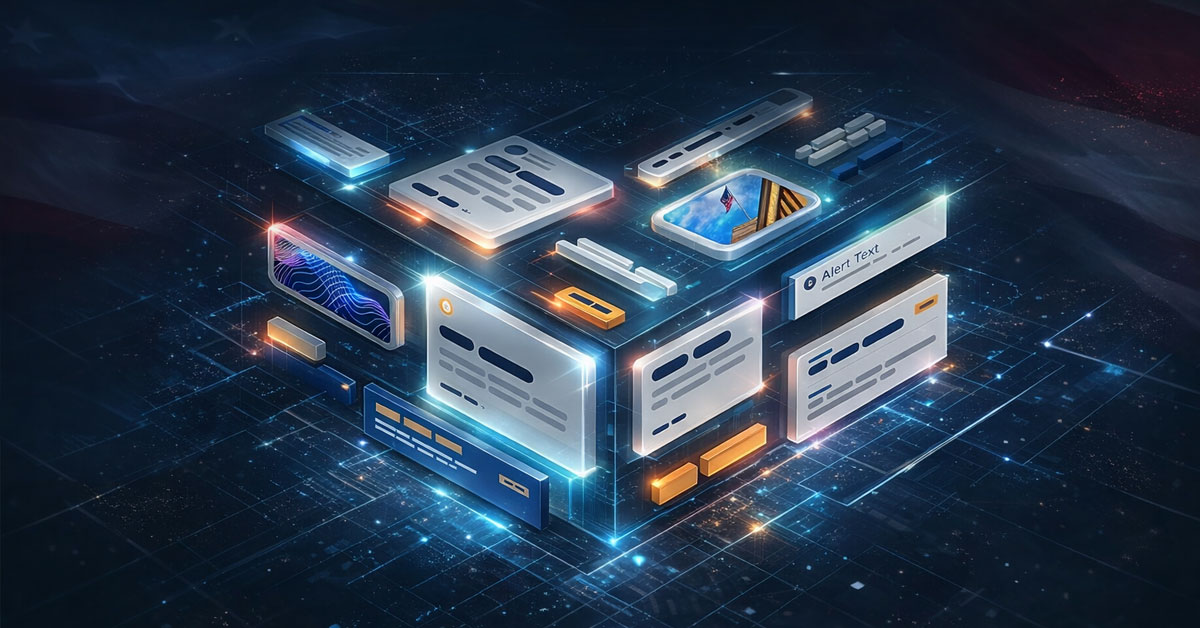
Modular web design is a flexible approach for creating reusable page components – think headers and footers, hero sections, body copy, buttons, tiles/cards, etc. Much like building blocks, design modules are discrete units designed to work together to create a unified whole. This enables teams to evolve websites iteratively rather than fully rebuilding every few years – a significant advantage for federal agencies, given the pace of digital policy, technology, and user expectations.
While it’s not a new philosophy – commercial web designers have been working this way since ~2010, and the modular United States Web Design System (USWDS) launched in 2015. Yet according to the White House fact sheet, of the estimated 26,000 federal websites, fewer than 20 percent use USWDS.
How does modular web design work?
Modular web design works hand in hand with site development. Components move fluidly from design to build and test, accelerating the process and enabling teams to scale design and code quickly. This helps improve the development process overall, encouraging everyone to adopt systems thinking and share ownership for site quality.
The good news for federal web teams is that applying modular web design is easier than it’s ever been. Modern design tools like Figma and Adobe XD are engineered for modularity and built to integrate with development tools like Storybook.
Reaping the benefits of modular web design
At Spire, we apply the concepts and agile workflows of modular web design on behalf of a wide range of federal and govcon clients. Our most recent redesign – HealthIT.gov (slated for launch this fall) – showcases the many benefits of this approach.
Flexible, content-led page layouts
Traditional approaches to web design often result in a site that cannot efficiently adapt to an agency’s evolving needs over time. Rigid templates force content editors to shoehorn information into page layouts, creating awkward information hierarchies. In some cases, agencies end up creating standalone microsites to work around these design limitations.
With modular web design, having a library of reusable components translates into many more layout options despite having fewer core page templates. This flexibility means content strategy and user journeys – not arbitrary templates – can drive decisions about where to place content.
Streamlined content maintenance
Modular web design dramatically lowers the lifetime cost of content maintenance. Because content editors can build and modify page layouts directly by adding or reordering components on a given page, agencies can eliminate the need for expensive and time-consuming page-level support from developers.
Consistency today and tomorrow
Traditional web design is often done on a section-by-section basis, meaning older site content will reflect older versions of the agency brand or style. With modular design, colors, fonts, and other specifications are built into each component and can be updated at the component level.
This helps web teams guard against rogue design efforts – for example, nonstandard buttons or card elements – that break the visual patterns users rely on to navigate information and complete their goals. It also enables agencies to implement brand or identity changes with much less effort.
Compliance
The section-by-section and template-by-template approaches to design create a similar challenge with compliance. Inconsistencies across sections or templates can result in a website that fails to adhere to relevant federal standards.
By following best practices in design and testing at the component level, modular web design ensures that every page will comply with all required standards such as USWDS, Section 508, and the Web Content Accessibility Guidelines (WCAG). And as standards evolve, remediating components is far easier than upgrading pages.
Reduced level of effort for design enhancements
Once an agency has implemented a modular website, future design efforts can also take a modular approach – adding or modifying components to reflect changes in brand and identity, upgrading design elements to reflect ever-evolving UX standards, or adding functionality.
When changes can be applied at the component level, a full-scale redesign isn’t necessary. Rather, agencies can make changes ranging from large design upgrades to small updates easily, and the changes will be universally applied. Equally important, agencies can modify patterns for new content sections and apply them almost instantly across the entire site.
The key to reimagining federal websites
Websites play a vital role in the work of the federal government – informing and engaging citizens and industry, delivering services online, and advancing innovation. As agencies scope website redesign projects under America by Design, modular web design holds an important key to bringing its vision to life.
In part two of this series, we’ll share four critical steps for federal agencies as they move forward with website modernization efforts.
In the meantime, if your agency is ready to modernize its digital experience, Spire’s award-winning web design and development team is ready to help. Contact us for a robust RFI response with relevant and compelling past performance.